How It Works

A Clear, Connected ADHD Care Pathway

CALM is designed to support post-secondary students with attention difficulties, executive functioning challenges, procrastination, overwhelm, and related concerns.

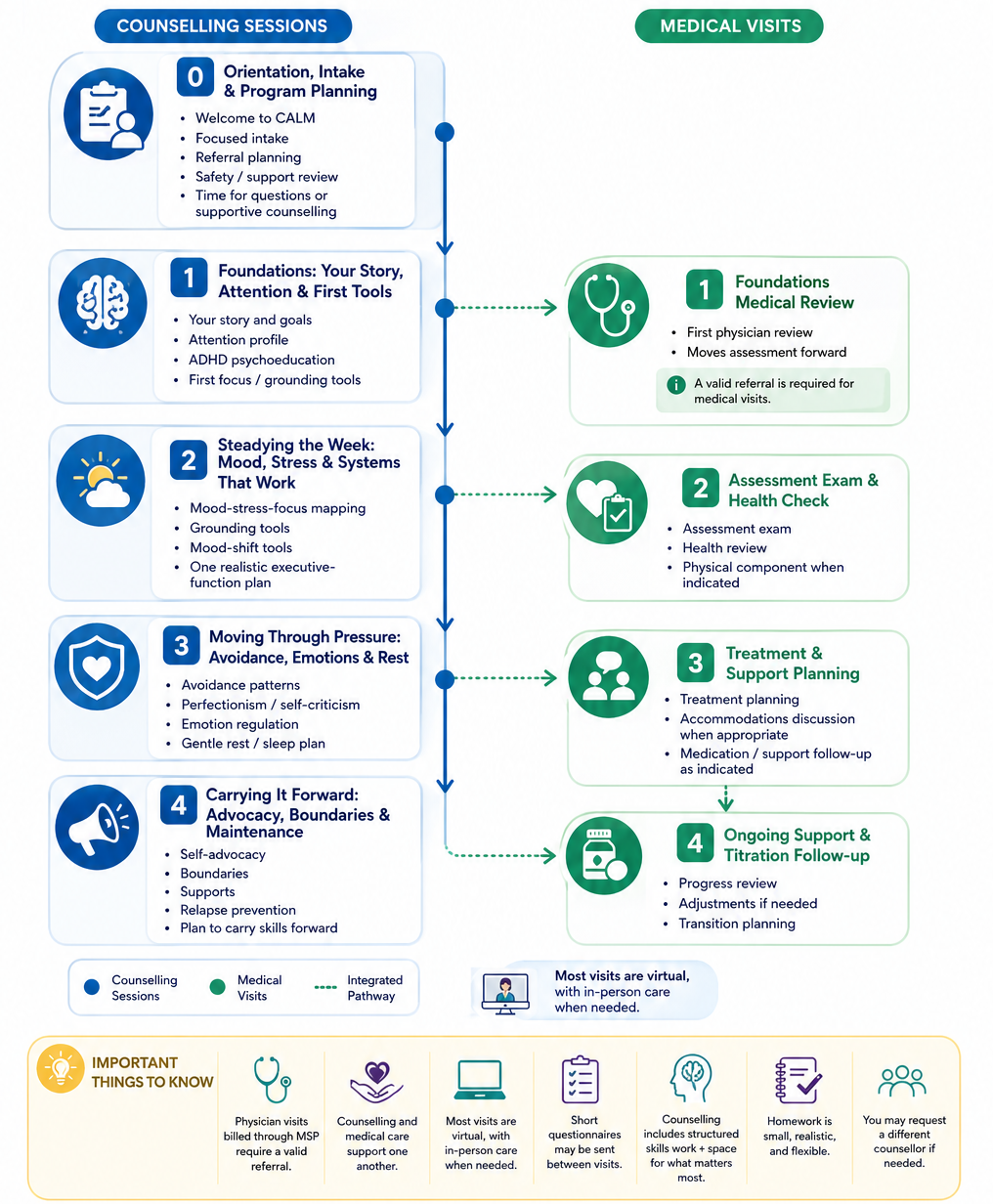
Our model combines structured counselling and physician care in one connected pathway. The counselling visits help students understand patterns, practise practical skills, and improve day-to-day functioning. The medical visits are woven in along the way to support assessment, treatment planning, and follow-up.

Your CALM Pathway Explained:

Session 0: Orientation, Intake, and Program Planning
Your starting point at CALM. This visit focuses on orientation to the program, a focused intake, referral planning, safety/support review, and a student-choice block for questions or supportive counseling.

Session 1: Foundations: Your Story, Attention, and First Tools
This session focuses on your story, goals, attention profile, practical ADHD psychoeducation, and first focus / grounding tools.

Session 2: Steadying the Week: Mood, Stress, and Systems That Work
This session focuses on mood-stress-focus mapping, grounding and mood-shift tools, and one realistic executive-function plan.

Medical Visit 1: Foundations Medical Review
The first physician visit helps move the assessment forward. A valid referral is required for MSP-covered medical visits.

Session 3: Moving Through Pressure: Avoidance, Emotions, and Rest
This session focuses on avoidance, perfectionism, self-criticism, emotion regulation, and a gentle rest / sleep support plan.

Medical Visit 2: Assessment Exam and Health Check
This visit includes the assessment exam and health check, including the physical component where indicated.

Session 4: Carrying It Forward: Advocacy, Boundaries, and Maintenance
This session focuses on self-advocacy, boundaries, supports, relapse prevention, and a plan to carry skills forward.

Medical Visit 3: Treatment and Support Planning
This visit focuses on treatment planning, accommodations discussion when clinically appropriate, and medication / support follow-up as indicated.

Medical Visit 4: Ongoing Support and Titration Follow-up
This visit focuses on progress review, titration or adjustments if needed, and transition planning.


Important Things to Know

A referral is needed for physician visits
If you are seeking the doctor through MSP coverage, a valid referral is required before you can access the physician visits in the program. After Session 0, we will give you clear instructions on how to get this done so there are no unnecessary delays.

Counselling sessions include both structure and flexibility
Counselling sessions include structured skills work, and there is also protected time to talk about what feels most important or to practise one of your handout exercises together with your counsellor.

Support questionnaires matter
You will receive short questionnaires through our app between sessions. These help the clinical and medical teams understand your symptoms, track progress, and plan the next steps with you.

The pathway is student-centered
You can request a different counsellor at any time if another fit would feel better. The goal is for the process to feel supportive, clear, and collaborative.

Small, realistic progress is Enough
Post-session “Homework” are small (noncompulsory) tasks given after each session. They are meant to be small, realistic, and flexible. It is okay to bring back partial attempts or to say a tool did not fit. CALM works best when students aim for small, repeated changes, not perfection.

Ready to Start?

Book Session 0: Orientation, Intake, and Program Planning to begin.